The History of Turkish Jews
by Naim Avigdor
GÜLERYÜZ
Foreword
On the midnight of August 2nd 1492, when Columbus embarked on what
would become his most famous expedition to the New World, his fleet departed
from the relatively unknown seaport of Palos because the shipping lanes
of Cadiz and Seville were clogged with Sephardic Jews expelled from Spain by the Edict of Queen Isabella and King Ferdinand of Spain.
The Jews forced either to convert to Christianity or to "leave"
the country under menace "they dare not return... not so much as to take a
step on them not trespass upon them in any manner whatsoever" left their
land, their property, their belongings all that was theirs and familiar to them
rather than abandon their beliefs, their traditions, their heritage.
In the faraway Ottoman Empire, one ruler extended an immediate
welcome to the persecuted Jews of Spain, the Sephardim. He was the Sultan Bayazid II.
In 1992, the Discovery year for all those connected to the
American continents - North, Central and South - world Jewry was concerned with
commemorating not only the expulsion, but also seven centuries of the Jewish
life in Spain, flourishing under Muslim rule, and the 500th anniversary of the
official welcome extended by the Ottoman Empire in 1492.
This humanitarianism demonstrated at that time, was consistent
with the beneficence and goodwill traditionally displayed by the Turkish
government and people towards those of different creeds, cultures and
backgrounds. Indeed, Turkey could serve as a model to be emulated by any nation
which finds refugees from any of the four corners of the world standing at its
doors.
In 1992, Turkish Jewry celebrated not only the anniversary of this
gracious welcome, but also the remarkable spirit of tolerance and acceptance
which has characterized the whole Jewish experience in Turkey. The events being
planned - symposiums, conferences, concerts, exhibitions, films and books,
restoration of ancient Synagogues etc - commemorated the longevity and
prosperity of the Jewish community. As a whole, the celebration aimed to
demonstrate the richness and security of life Jews have found in the Ottoman
Empire and the Turkish Republic over seven centuries, and showed that indeed it
is not impossible for people of different creeds to live together peacefully
under one flag.
A History Predating 1492
The history of the Jews in Anatolia started many centuries before
the migration of Sephardic Jews. Remnants of Jewish settlements from the 4th
century B.C. have been uncovered in the Aegean region. The historian Josephus
Flavius relates that Aristotle "met Jewish people with whom he had an
exchange of views during his trip across Asia Minor."
Ancient synagogue ruins have been found in Sardis, Miletus,
Priene, Phocee, etc. dating from 220 B.C. and traces of other Jewish settlements
have been discovered near Bursa, in the southeast and along the Aegean,
Mediterranean and Black Sea coasts. A bronze column found in Ankara confirms the
rights the Emperor Augustus accorded the Jews of Asia Minor.
Jewish communities in Anatolia flourished and continued to prosper
through the Turkish conquest. When the Ottomans captured Bursa in 1326 and made
it their capital, they found a Jewish community oppressed under Byzantine rule.
The Jews welcomed the Ottomans as saviours. Sultan Orhan gave them permission to
build the Etz ha-Hayyim (Tree of Life) synagogue which
remained in service until nineteen forties.
Early in the 14th century, when the Ottomans had established their
capital at Edirne, Jews from Europe, including Karaites, migrated there. (1)
Similarly, Jews expelled from Hungary in 1376, from France by Charles VI in
September 1394, and from Sicily early in the 15th century found refuge in the
Ottoman Empire. In the 1420s, Jews from Salonika, then under Venetian control,
fled to Edirne. (2)
Ottoman rule was much kinder than Byzantine rule had been. In
fact, from the early 15th century on, the Ottomans actively encouraged Jewish
immigration. A letter sent by
Rabbi Yitzhak Sarfati (from Edirne) to Jewish communities in Europe
in the first part of the century "invited his co-religionists to leave the
torments they were enduring in Christiandom and to seek safety and prosperity in
Turkey". (3)
When Mehmet II "the Conqueror" took Constantinople in 1453, he
encountered an oppressed Romaniot (Byzantine) Jewish community which welcomed
him with enthusiasm. Sultan Mehmet II issued a proclamation to all Jews "...
to ascend the site of the Imperial Throne, to dwell in the best of the land,
each beneath his Dine and his fig tree, with silver and with gold, with wealth
and with cattle...". (4)
In 1470, Jews expelled from Bavaria by Ludvig X found refuge in
the Ottoman Empire. (5)
A Haven for Sephardic Jews
Sultan Bayazid II's offer of refuge gave new hope to the
persecuted Sephardim. In 1492, the Sultan ordered the governors of the provinces
of the Ottoman Empire "not to refuse the Jews entry or cause them
difficulties, but to receive them cordially"; (6) According to Bernard
Lewis, "the Jews were not just permitted to settle in the Ottoman lands, but
were encouraged, assisted and sometimes even compelled".
Immanual Aboab attributes to Bayazid II the famous remark that "the Catholic monarch Ferdinand was wrongly considered as wise, since he
impoverished Spain by the expulsion of the Jews, and enriched Turkey". (7)
The arrival of the Sephardim altered the structure of the
community and the original group of Romaniote Jews was totally absorbed.
Over the centuries an increasing number of European Jews, escaping
persecution in their native countries, settled in the Ottoman Empire. In 1537
the Jews expelled from Apulia (Italy) after the city fell under Papal control,
in 1542 those expelled from Bohemia by King Ferdinand found a safe haven in the
Ottoman Empire. (8) In March of 1556, Sultan Suleyman "the Magnificent" wrote a
letter to Pope Paul IV asking for the immediate release of the Ancona Marranos,
which he declared to be Ottoman citizens. The Pope had no other alternative than
to release them, the Ottoman Empire being the "Super Power" of those days.
By 1477, Jewish households in Istanbul numbered 1647 or 11% of the
total. Half a century later, 8070 Jewish houses were listed in the city.
The Life of Ottoman Jews
For 300 years following the expulsion, the prosperity and
creativity of the Ottoman Jews rivalled that of the Golden Age of Spain. Four
Turkish cities: Istanbul, Izmir, Safed and Salonica became the centres of
Sephardic Jewry.
Most of the court physicians were Jews: Hakim Yakoub, Joseph
and Moshe Hamon, Daniel Fonseca, Gabriel Buenaventura to name only very
few.
One of the most significant innovations that Jews brought to the
Ottoman Empire was the printing press. In 1493, only one year after
their expulsion from Spain, David & Samuel ibn Nahmias established
the first Hebrew printing press in Istanbul.
Ottoman diplomacy was often carried out by Jews. Joseph
Nasi, appointed the Duke of Naxos, was the former Portuguese Marrano Joao
Miques. Another Portuguese Marrano, Alvaro Mendes, was named Duke of
Mytylene in return of his diplomatic services to the Sultan. Salamon ben
Nathan Eskenazi arranged the first diplomatic ties with the British Empire.
Jewish women such as Dona Gracia Mendes Nasi "La Seniora" and Esther Kyra exercised considerable influence in the Court.
In the free air of the Ottoman Empire, Jewish literature
flourished. Joseph Caro compiled the Shulhan Arouh. Shlomo
haLevi Alkabes composed the Lekhah Dodi a hymn which welcomes the
Sabbath according to both Sephardic and Ashkenazi ritual. Jacob Culi began to write the famous MeAm Loez. Rabbi Abraham ben Isaac Assa became known as the father of Judeo-Spanish literature.
On October 27,1840 Sultan Abdulmecid issued his famous ferman
concerning the "Blood Libel Accusation" saying: "... and for the
love we bear to our subjects, we cannot permit the Jewish nation, whose
innocence for the crime alleged against them is evident, to be worried and
tormented as a consequence of accusations which have not the least foundation in
truth...".
Under Ottoman tradition, each non-Muslim religious community was
responsible for its own institutions, including schools. In the early 19th
century, Abraham de Camondo established a modern school, "La
Escola", causing a serious conflict between conservative and secular rabbis
which was only settled by the intervention of Sultan Abdulaziz in 1864. The same
year the Takkanot haKehilla (By-laws of the Jewish Community) was
published, defining the structure of the Jewish community.
An important event in the life of Ottoman Jews in the 17th century
was the schism led by Sabetay Sevi, the pseudo Messiah who lived in
Izmir and later adopted Islam with his followers.
Equality and a New Republic
Efforts at reform of the Ottoman Empire led to the proclamation of
the Hatt-ı Humayun in 1856, which made all Ottoman citizens, Muslim and
non-Muslim alike, equal under the law. As a result, leadership of the community
began to shift away from the religious figure to secular forces.
World War I brought to an end the glory of the Ottoman Empire. In
its place rose the young Turkish Republic. Mustafa Kemal Ataturk was
elected president, the Caliphate was abolished and a secular constitution was
adopted.
Recognized in 1923 by the Treaty of Lausanne as a fully
independent state within its present day borders, Turkey accorded minority
rights to the three principal non-Muslim religious minorities and permitted them
to carry on with their own schools, social institutions and funds. In 1926, on
the eve of Turkey's adoption of the Swiss Civil Code, the Jewish Community
renounced its minority status on personal rights.
During the tragic days of World War II, Turkey managed to maintain
its neutrality. As early as 1933 Ataturk invited numbers of prominent German
Jewish professors to flee Nazi Germany and settle in Turkey. Before and during
the war years, these scholars contributed a great deal to the development of the
Turkish university system. During World War II Turkey served as a safe passage
for many Jews fleeing the horrors of the Nazism. While the Jewish communities of
Greece were wiped out almost completely by Hitler, the Turkish Jews remained
secure. Several Turkish diplomats, Ambassadors Behic Erkin and Numan Menemencioglu; Consul-Generals Fikret Sefik Ozdoganci,
Bedii Arbel, Selahattin Ulkumen; Consuls Namik Kemal Yolga and
Necdet Kent, just to name only few, made every effort to save the Turkish
Jews in the Nazi occupied countries, from the Holocaust. They succeeded. Mr. Salahattin Ulkumen, Consul General at Rhodes in 1943-1944, was
recognized by the Yad Vashem as a Righteous Gentile "Hassid Umot
ha'Olam" in June 1990. Turkey continues to be a shelter, a haven for all
those who have to flee the dogmatism, intolerance and persecution.
Turkish Jews Today
The present size of Jewish Community is estimated at around
25.000. The vast majority live in Istanbul, with a community of about 2.500 in
Izmir and other smaller groups located in Adana, Ankara, Antakya, Bursa,
Canakkale, Kirklareli etc. Sephardim make up 96% of the Community, with
Ashkenazim accounting for the rest. There are about 100 Karaites, an independent
group who does not accept the authority of the Chief Rabbi.
Turkish Jews are legally represented, as they have been for many
centuries, by the Hahambasi, the Chief Rabbi. He is assisted by a religious
Council made up of five Hahamim. Fifty Lay Counsellors look after the secular
affairs of the Community and an Executive Committee of fourteen runs the daily
matters. Representatives of Jewish foundations and institutions meet four times
a year as a so-called ??think tank?? to exchange opinions on different subjects
concerning the Turkish Jewry.
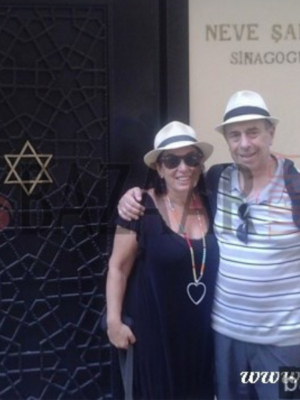
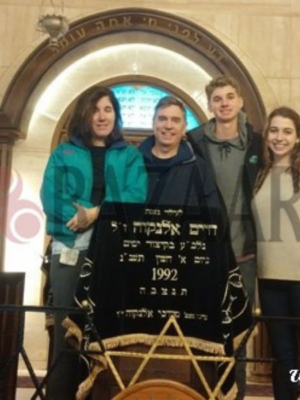
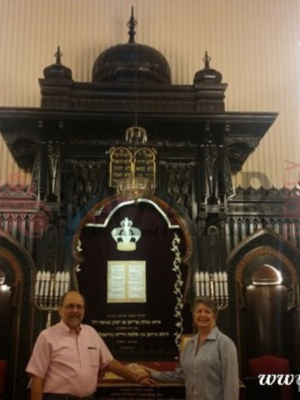
Synagogues are classified as religious foundations (Vakifs). There
are 18 synagogues in use in Istanbul today. Three are in service in holiday
resorts, during summer only. Some of them are very old, especially Ahrida Synagogue in the Balat
area, which dates from middle15th century. The 15th and 16th century Haskoy and
Kuzguncuk cemeteries in Istanbul are still in use today.
??The Museum of Turkish Jews?? (Türk Musevileri Müzesi),
the first such Museum in Turkey, has been inaugurated on November 25,2001.
(Details at the end of this article)
Education, Language and Social Life
Most Jewish children attend state schools or private Turkish or
foreign language schools, and many are enrolled in the universities.
Additionally, the Community maintains in Istanbul a school complex including
elementary and secondary schools for around 700 students. Turkish is the
language of instruction, and Hebrew is taught 3 to 5 hours a week.
While younger Jews speak Turkish as their native language, the
over-70-years-old generation is more at home speaking in French or Judeo-Spanish
(Ladino). A conscious effort is spent to preserve the heritage of
Judeo-Spanish.
For many years Turkish Jews have had their own press. La Buena
Esperansa and La Puerta del Oriente started in Izmir in 1843 and Or Israel was first published in Istanbul ten years later. Now one
newspaper survives: SALOM (Shalom), a fourteen to sixteen pages weekly
in Turkish with one page in Judeo-Spanish.
A Community Calendar (Halila) is published by the Chief Rabbinate
every year and distributed free of charge to all those who have paid their dues
(Kisba) to the welfare bodies. The Community cannot levy taxes, but can request
donations.
Two Jewish hospitals, the 98 bed Or-Ahayim in Istanbul
and the 22 bed KaratasHospital in Izmir, serve the Community. Both
cities have homes for the aged (Moshav Zekinim) and several welfare associations
to assist the poor, the sick, the needy children and orphans.
Social clubs containing libraries, cultural and sports facilities,
discotheques give young people the chance to meet.
The Jewish Community is of course a very small group in Turkey
today, considering that the total population - 99% Muslim - exceeds 67 million.
But in spite of their number the Jews have distinguished themselves. There are
several Jewish professors teaching at the Universities of Istanbul and Ankara,
and many Turkish Jews are prominent in business, industry, liberal professions
and journalism.
(1) Mark Alan Epstein, "The Ottoman Jewish
Communities and their role in the 15th and 16th centuries"
(2) Joseph Nehama, "Histoire des Israelites
de Salonique"
(3) Bernard Lewis, "The Jews of
Islam"
(4) Encyclopedia Judaica, Volume 16 page
1532
(5) Avram Galante, "Histoire des Juifs
d'lstanbul", Volume 2
(6) Abraham Danon, Review Yossef Daath
No.4
(7) Immanual Aboab, "A Consolacam as
Tribulacoes de Israel, III Israel"
(8) H. Graetz, History of the Jews |